


Supported Housing · 1 July 2026
The Different Types of Social Housing in the UK, Explained
By the Silkwood Group team · 8 min read · Updated 1 July 2026
Key takeaways
- • Social housing is not one thing. It runs from ordinary below-market homes through to highly specialist housing built around a resident's needs.
- • Demand is rising while supply falls: 1.34 million households are on England's social housing waiting list, the highest since 2014.
- • The Renters' Rights Act, mostly in force from May 2026, has pushed income-focused investors to look beyond ordinary buy to let.
- • Some of the largest institutions in the country, Blackstone, Legal & General, M&G and USS among them, have moved billions into UK affordable and social housing.
- • The two things that matter most before you look at it: what you are paying and why, and the strength of the organisation that runs the home.
Social housing is one of the most talked about corners of UK property investment right now, and one of the most misunderstood. This is a plain guide to the different forms it takes: what each one actually is, why investors are paying attention, and the things that genuinely matter if you are looking at it yourself. The aim is simply clear, honest information, so you can understand the sector properly.
A little context on where we sit. We have spent more than a decade in UK property, across many sectors, working with investors from all over the world, and the last 6 years increasingly in social housing, for what it brings to the communities it serves and what it offers investors who want a longer term solution. We work alongside operators and providers across the UK, so we see how the sector works from the inside.
Why it is drawing attention now
The reason comes down to a simple imbalance. The UK does not build enough homes, and has not for a very long time. In the most recent full year of official figures, England added 208,600 homes, around 91,000 below the government's own target of 300,000. Below the open market the pressure is greater still. There are now 1.34 million households on England's social housing waiting list, the highest since 2014, and in that same year the number of homes for social rent actually fell. Demand keeps climbing while supply falls further behind, and that is drawing private capital into a space long left almost entirely to councils and housing associations.
There is a regulatory shift behind it too. The Renters' Rights Act became law in 2025, and its biggest changes came into force across England in May 2026. Section 21 no-fault evictions are gone, fixed term tenancies are now open ended, and rent increases are limited to once a year and can be challenged, with more to come. For the everyday buy to let landlord that means more regulation, less control and more to manage. Investors who want something steadier and less hands on have started to look at social housing as a longer term alternative. It works on a different basis to the open market: homes are let through specialist providers, housing associations and similar bodies that house people on behalf of the public sector, so the demand behind it rests on social need rather than the swings of the property market.
The different types
Social housing is not one thing, and this is what many people do not realise. It is a spectrum, with very different models along it.
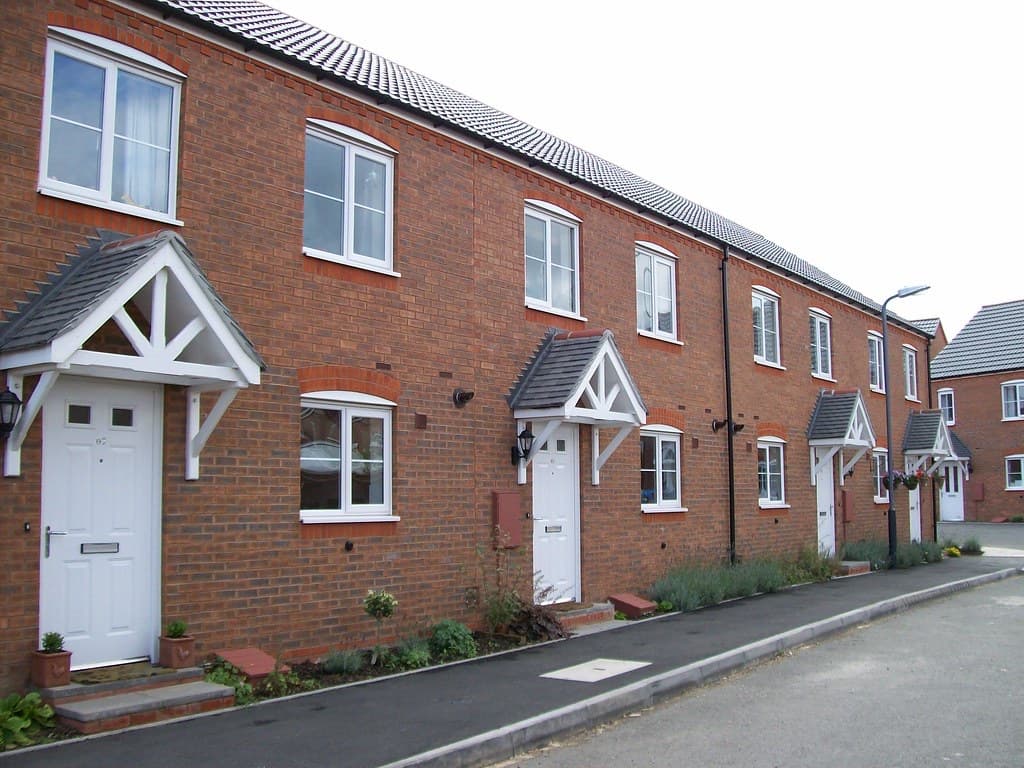
At the most familiar end is general needs and affordable housing: ordinary homes let at below market rents, usually by housing associations or councils, for people who are priced out of buying or renting privately.
Then there is asylum accommodation, housing contracted by the Home Office for people seeking asylum while their claims are dealt with. Only three contractors hold these government contracts. It is worth knowing this is not really part of traditional social housing; it sits at the more politically debated end of the sector, and much of the funding is under heavy scrutiny. We mention it for a full picture, but it is not the part most private investors are involved in.
Next is supported housing: homes for people who need a little more than four walls, where the home comes with some support attached. That might be a support worker who calls in, help managing the tenancy, or help building the confidence to live more independently. Think of an older person in sheltered housing, or someone getting back on their feet after a difficult period. The support is usually lighter touch.
And then there is specialist supported housing, where needs are higher and more complex, the support far more involved, and the homes are usually designed or adapted around the people living in them. It is the most specialised end of the market and works very differently again. We will keep this one to the broad picture, because the detail of how it works is genuinely a conversation rather than an article.
Why it exists, and what it saves
What ties most of these together is that they answer a public need, and it helps to understand why the country supports them, because it comes down to money already being spent. The National Housing Federation estimated in April 2025 that supported housing in England saves the public purse around £3.5 billion every year at today's prices, because the alternatives cost far more. Mencap and ITV News found around £534 million a year is spent keeping just over 2,000 people with a learning disability or autism in hospital, at roughly £237,000 per person, when the NHS's own view was that 41% of them should not be there. On homelessness, councils in England spent £2.8 billion on accommodation in a single year, up 25%, with a record 134,760 households in temporary accommodation. Against numbers like those, a settled home with the right support is the cheaper and better option. And it is long established: the protection for this housing goes back to 1996 and the national funding system to 2003, so it has been part of the public finances for the best part of 30 years.
Why institutions are moving in
Some of the biggest names in finance have quietly put serious money into this part of UK housing, and they say why in their own words. Blackstone has invested over £3.7 billion into its UK affordable homes business, Sage Homes, now more than 19,000 homes. The Universities Superannuation Scheme, one of the country's largest pension funds, paid £405 million in 2024 for more than 3,000 shared ownership homes, describing it as long term capital behind a multi decade plan. Legal & General has put over £1 billion into UK affordable housing since 2018 and now holds more than 9,000 homes. M&G committed over £1 billion across UK social infrastructure and affordable housing in January 2026. Aviva, alongside the new National Housing Bank, committed £100 million in March 2026. Behind all of it sits the government's own programme of up to £39 billion over 10 years for around 300,000 homes. We are not suggesting what any of these funds expect to earn, and would not. The point is simply that when this much patient, long term capital moves in the same direction, it is worth understanding why.
The honest considerations
It all sounds rather good, which is exactly when people say it sounds too good to be true. So, plainly: like any investment, this carries real considerations, and two matter most.
The first is price. You usually pay a premium for these homes, more than a similar property on the open market. There can be sound reasons, the home may be adapted for the people living there, or valued on what it earns rather than on what the house next door sold for. Either way the rule is simple: understand exactly what you are paying for, and why.
The second matters even more: the operator, the organisation that runs the home and pays you. Your investment is only ever as strong as they are. So the fair question is what happens if that operator gets into difficulty. Here we are not guessing, because there is a track record and a system built for exactly this.
How residents, and investors, are protected
The sector is overseen by a government body, the Regulator of Social Housing. Since 2018 there has also been a special legal process for any provider that fails, whose main job is to keep the homes running and protect the people living in them, though in practice the regulator usually steps in earlier. When a small provider got into trouble in 2018 with weak management and too little cash, nobody lost their home: the homes were moved to other registered providers and everyone stayed protected. The same happened with another provider that was steadied and later merged into a stronger group.
The regulator's 2025 accounts show that across the larger providers the sector holds a £1.9 billion surplus, billions in cash and more than £30 billion of borrowing it can draw on, across around 4.5 million regulated homes. The larger associations can also access government grant funding that smaller failed operators generally never had. That is the real difference: deeper resources, funding behind them, and a regulator whose purpose is to catch problems early. So the single most important thing in this sector is to work with an established housing association with a strong track record, performing well and growing at a sensible, sustainable pace.
If any of this is relevant to you and you would like to understand the sector properly for your own situation, we are always happy to have an open, transparent conversation. No pressure and no hard sell, just a straight discussion to help you work out what does, and does not, make sense for you.
Want this kind of insight applied to your own plans? Book a call or view current developments.
This article is for general information and education only and does not constitute financial advice. Figures are drawn from the sources listed and were correct at the time of writing.